
Our bodies naturally contain bacteria. Some are harmful and can make us sick, but many are beneficial and necessary for a healthy life.
Probiotics are a mixture of beneficial bacteria (there are many types, called strains) and fungi that are naturally in our body and help, among other things, to keep bad bacteria and fungi at bay.
These bacteria are part of our microbiome: a community of organisms that helps our body function properly. We used to know these organisms as gut flora, but we now know that they are present throughout our body, not just in the digestive system, and that our health depends heavily on the health of our microbiome.
Why take a probiotic supplement?
Although probiotics are naturally present in our bodies, there are several reasons why their levels decrease, allowing harmful bacteria to grow and disrupt our microbiome.
Some of the things that contribute to having fewer good bacteria in our body are illnesses and viruses, some medications, our diet, excessive hygiene, and lifestyle.
Taking a probiotic supplement (in the form of food, or in pill form), especially during times when we know our microbiome is damaged, can help us repopulate it.
Some of the health problems that we know can improve with a probiotic supplement, according to the Cleveland Clinic in the United States, are:
- Diarrhea caused by antibiotics and Clostridooides difficile infection.
- Urinary tract infections
- Gingivitis
- Lactose intolerance
- Atopic dermatitis
- Cold
- Sinusitis
- Constipation
- Inflammatory bowel disease
- Inflammatory bowel syndrome
How to take probiotics?
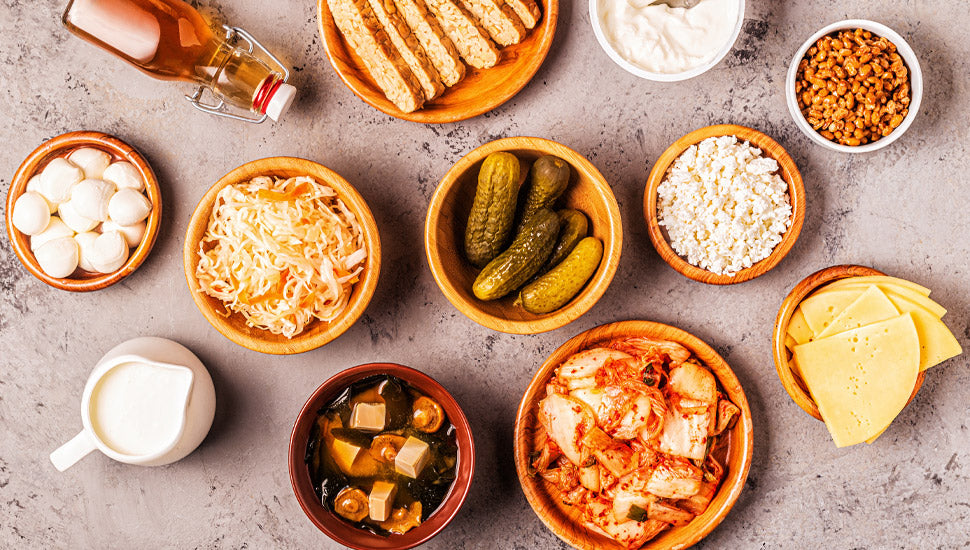
We can include probiotics in our diet—in fact, this is what was done in ancient times. Many, if not all, cultures include probiotic foods among their traditional foods—sauerkraut in Germany, miso in Japan, yogurt in Greece, or pickles and cheeses in Spain. It's a good idea to include these foods in our meals, and to do so in a variety of ways, to increase the number of strains—or types of bacteria—that we consume.
In addition, we can take a probiotic supplement to help populate our microbiome.
At Mediterranean Health we recommend taking a probiotic supplement that has several strains, and that includes strains that are resistant to gastric juices, so that they can also reach the intestine.
In addition to probiotics, it's important to eat foods containing prebiotics, which are fibers and sugars that serve as food for beneficial bacteria. Fruits and vegetables contain prebiotics, and they can also be taken as supplements, known as prebiotic fiber or fructooligosaccharides (FOS).
Flora 9, Árbol Verde, our probiotic supplement contains, in addition to 9 probiotic strains, chicory fructooligosaccharides to feed the probiotics.
What else can I do to maintain a healthy microbiome?
Taking probiotics is very important to maintain a healthy microbiome, but it's also important to try not to damage it whenever possible.
Added sugar, alcohol, and strong and/or antibacterial cleaning products can damage our microbiome. So can some medications, especially antibiotics.
We can mitigate the damage caused by this by limiting added sugar and alcohol in our diets. Regarding cleaning products, we should only use bleach when truly necessary—gentler products can be used—and only use antibacterial gels when absolutely necessary. Washing our hands with soap is just as, if not more, effective and doesn't harm our microbiome.
If you take an antibiotic—and they are necessary when prescribed by a doctor—take it as prescribed, and consult with your doctor about whether you can take a probiotic supplement during and after taking them.
Do you want to take a probiotic supplement?
We recommend Flora 9 Green Tree
