
Fiber should be an essential part of our diet; however, most of us don't get enough, as the prevalence of fast food, ultra-processed foods, and the amount of animal protein that the Western diet usually contains, leaves fiber in a marginal place.
The European Food Safety Authority recommends a daily intake of 25 grams of fiber for adults. According to several studies, current fiber consumption in Spain, as in other developed countries, does not even reach half of this recommendation.
Fiber is essential because, in addition to facilitating bowel movements—fiber adds bulk and increases the water content of stool, making it softer—it helps the excretory system function efficiently, eliminating fats, toxins, and other normal waste products produced by our bodies. This, in turn, helps regulate our bodies, balancing cholesterol levels, preventing excessive mucus buildup in our respiratory system, and keeping our skin cleaner—remember that the skin also has an excretory function. Furthermore, fiber helps slow the absorption of carbohydrates, thus preventing blood sugar spikes and maintaining stable blood sugar levels .
If we followed an ideal diet—high in vegetables, fruits, whole grains, and nuts—we could consume all the recommended fiber. However, according to experts in agriculture and nutrition, today's fruits and vegetables contain less fiber than in ancient times because varieties of fruits and vegetables are cultivated that are easier to eat—think, for example, of seedless watermelon and grapes, baby spinach, or "new" potatoes with very thin skin, which, while delicious, do not provide as much fiber.
A fiber supplement, such as one made with psyllium, can supplement an already high-fiber diet by adding 10 grams daily (the recommended dose) to what you already consume. It's not about eating a fiber-free diet and then adding it in supplement form, but rather about eating a healthy diet with plenty of fiber and also supplementing with plant-based fiber.
Which fiber should I take?
At Mediterranean Health, we recommend and use Plantago ovata plant fiber, also known as psyllium, with the husk intact. This is a minimally processed fiber, meaning it still has the seed husk, the most fibrous part, and is not ground. In this way, in addition to adding fiber to our diet, this fiber has a "scouring" effect on our digestive system—this is a simplification—but it does help to remove waste.
What does it feel like to take a fiber supplement?
You can take the fiber supplement at night, for example, before going to sleep, so that you can go to the bathroom in the morning.
We recommend filling a large glass with room temperature water, then adding a teaspoon of fiber, mixing quickly, and drinking immediately. Psyllium absorbs water and gels quite rapidly, so if you wait a while before drinking it, it may be more difficult to swallow. It doesn't taste like anything, well, maybe like straw.
Fiber takes a few hours to work; it's not immediate. You might feel a bit heavy the first few days, but after two or three days you'll notice that you're going to the bathroom more easily and efficiently. :)
When you take a fiber supplement, it is very important that you drink enough water every day, not only because drinking water is necessary, but because fiber also increases the amount of water our body uses to excrete.
Who should take a fiber supplement?
In reality, the vast majority of us can benefit from a fiber supplement, but it is always advisable to consult with a specialist, especially those who have autoimmune diseases and/or problems with the digestive system, for example ulcerative colitis, celiac disease, etc.
Are you ready to take a fiber supplement?
We recommend two options:
- Green Tree Ecological Plant Fiber: Plantago Ovata (Psyllium) plant fiber with husk.

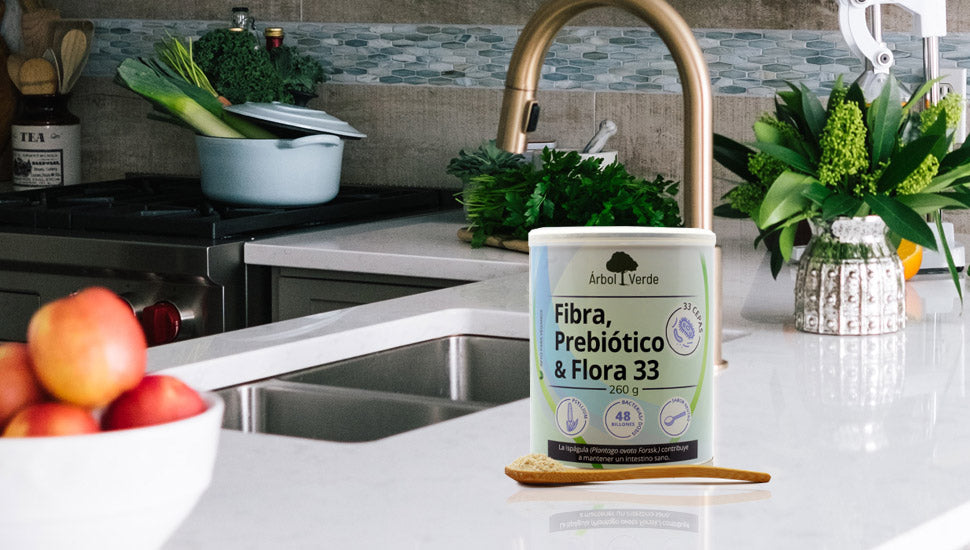
- Fiber, prebiotics & Flora 33: Plantago Ovata (Psyllium) vegetable fiber with husk, with prebiotics and a probiotic complex.
